
The global cannabis industry is beginning to shift from rapid market entry to long-term operational maturity. Across Europe and other emerging international markets, cultivators are facing increasing pressure to align with Good Manufacturing Practice (GMP) and pharmaceutical-grade standards. This shift reflects a broader repositioning of cannabis—not simply as an agricultural product, but as a regulated input within medical and pharmaceutical supply chains.
For commercial cultivators operating across borders, the challenge is no longer just producing high yields. It is demonstrating the ability to meet cannabis GMP compliance standards and produce consistent, pharmaceutical-grade products. This is where infrastructure design, system integration, and data management become critical.
Cannabis and the Transition to Pharmaceutical Standards
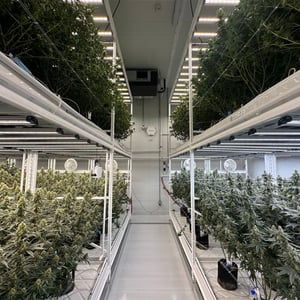 In established EU markets such as Germany, cannabis cultivation is already closely tied to pharmaceutical distribution channels. As additional countries expand medical programs or explore broader regulatory frameworks, expectations around quality assurance, documentation, and process validation are increasing.
GMP frameworks emphasize several core principles:
- Controlled and repeatable production processes
- Stable environmental conditions
- Centralized system oversight
- Continuous monitoring and data capture
- Full traceability of inputs, conditions, and outputs
For cultivators, meeting cannabis GMP compliance expectations requires more than procedural documentation. It requires physical systems capable of delivering consistent performance while generating reliable, audit-ready data. Facilities built using fragmented or decentralized systems often encounter challenges when attempting to align with GMP requirements. Variability between rooms, limited data visibility, and manual errors can all introduce risk into the production process.
Infrastructure as the Foundation of Cannabis GMP Compliance
In pharmaceutical manufacturing, compliance begins with infrastructure. The same principle is increasingly being applied to cannabis cultivation.
Lighting, power distribution, and environmental controls must function as part of a unified system rather than independent components. Centralization reduces variability, simplifies monitoring, and supports consistent documentation—key elements of GMP-aligned operations.
Additionally, maintenance practices play a critical role in cannabis GMP compliance. Systems that require frequent in-room servicing or canopy-level intervention can introduce contamination risks and disrupt controlled environments. Designing infrastructure that enables external maintenance and minimal crop exposure supports both operational efficiency and regulatory alignment.
 The Role of Data in eGMP Environments
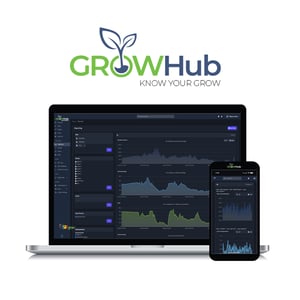
As markets mature, many operators are looking beyond GMP toward electronic Good Manufacturing Practice (eGMP) frameworks. eGMP places greater emphasis on data integrity, security, and accessibility.
This includes:
- Time-stamped, continuously recorded environmental data
- Secure storage and controlled access to system records
- Real-time deviation alerts and audit trails
- Long-term data retention for regulatory review
For cannabis cultivation facilities, this means that monitoring systems must do more than display conditions—they must create a reliable digital record of operations over time.
Without centralized data systems, achieving this level of traceability can be difficult, particularly across multi-room or multi-site operations.
Enabling Cannabis GMP Compliance with TSRgrow Technology
TSRgrow’s approach to cultivation infrastructure is designed to support the evolving needs of global operators, particularly those aligning with GMP and eGMP expectations.
Rather than treating lighting, power, and environmental monitoring as separate systems, TSRgrow integrates them into a unified platform - a TOTALGrow Solution. This systems-based approach supports both operational performance and compliance readiness.
Key elements include:
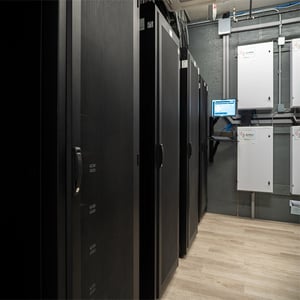
- Centralized Smart Remote Power
Power is managed outside of the grow environment, reducing heat load and enabling maintenance without entering controlled spaces. This supports contamination prevention and minimizes disruption during critical growth phases. - Advanced LED Lighting Systems
Full-spectrum, dimmable LED light fixtures provide consistent, controllable output across all growth stages. Centralized control enables repeatable lighting strategies aligned with validated production processes. - Integrated Environmental Monitoring
Continuous, real-time monitoring of temperature, humidity, CO₂, and lighting conditions supports process control and deviation tracking. Data is captured and stored to support audit readiness and long-term analysis. - Centralized Control and Data Visibility
Operators can manage multiple rooms or facilities through a single interface, improving oversight and reducing variability across production environments.
This level of integration enables cultivators to move toward standardized, repeatable operations—an essential requirement for GMP-aligned production.
 Supporting Global Scalability in Cannabis GMP Compliance
For multinational operators, consistency across facilities is a key challenge. Differences in infrastructure, local practices, and system capabilities can lead to variability in product quality.
By implementing centralized, standardized systems, cultivators can replicate proven production models across regions while maintaining control over environmental conditions and operational data. This approach not only supports compliance but also strengthens brand reliability in regulated markets.
As global cannabis markets continue to develop, the ability to demonstrate consistent quality across borders will become increasingly important—particularly for companies supplying medical or pharmaceutical channels.
Looking Ahead at the Global Market
The global cannabis industry is entering a new phase—one defined by standardization, accountability, and integration with established regulatory frameworks. GMP and eGMP are no longer distant considerations; they are becoming foundational to long-term success in many markets.
For cultivators, preparing for this shift means rethinking infrastructure, not just processes. Systems that support centralized control, continuous monitoring, and data integrity will play a critical role in meeting future expectations.
TSRgrow’s technology reflects this direction, offering a platform designed to help cultivators operate with the consistency, transparency, and control required in a rapidly evolving global landscape.
As global standards continue to evolve, cultivators that prioritize infrastructure, data integrity, and system integration will be better positioned to meet GMP expectations.
Learn more about how TSRgrow is supporting compliant, scalable cultivation in regulated markets.
