
In commercial cannabis cultivation, lighting is not just a necessity—it is a revenue driver. Whether a facility spans 5,000 square feet or 250,000, lighting uptime directly influences plant health, yield consistency, and operational profitability. When lighting systems fail or underperform, the impact ripples through the entire grow cycle, often resulting in reduced output, delayed harvests, and unexpected labor and maintenance costs.
Cannabis lighting downtime is rarely planned, and that is what makes it so expensive. A single outage can disrupt photoperiod schedules, stress plants, and force cultivation teams into reactive mode. Over time, repeated interruptions erode return on investment and strain already tight margins. As LED lighting has become the industry standard, reliability—not just efficiency—has emerged as a defining factor in long-term cultivation success.
Industry data reinforces this shift. According to Cannabis Business Times’ 2025 State of the Cannabis Lighting Market, more than 80% of operators now rely on LED grow lights in vegetative rooms, with nearly the same adoption rate in flower rooms. As LEDs dominate cultivation environments, understanding what causes failures—and how to eliminate them—has become essential for modern operators.
Why Traditional Lighting Systems Create Downtime Risks
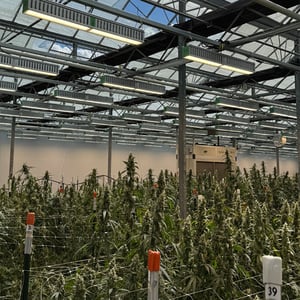 While LED grow lights are widely recognized for energy efficiency and longevity, many systems still rely on outdated design elements that introduce unnecessary risk. One of the most common failure points in traditional lighting fixtures is the ballast. Ballasts regulate electrical current to the light, but they are also highly susceptible to breakdowns caused by heat, moisture, wiring issues, power fluctuations, or simple component fatigue over time. Ballasts regulate electrical current to the light, but they are also highly susceptible to breakdowns caused by heat, moisture, wiring issues, power fluctuations, or simple component fatigue over time.
Market data and eligibility reports indicate that ballasts are the single most common failure point in LED grow lighting systems, responsible for an estimated 80% to 90% of all fixture failures. While the LED diodes themselves (the actual light chips) are rated to last 50,000+ hours, they rarely fail catastrophically. Instead, diodes slowly lose brightness over time. Ballasts, on the other hand, contain chemical components that degrade rapidly under stress—causing the entire fixture to flicker or go dark long before the diodes wear out.
When a ballast fails, diagnosing the issue is rarely straightforward. Cultivation teams must determine whether the problem stems from the fixture, wiring, power supply, or environmental exposure. This troubleshooting process increases labor costs, extends downtime, and can require partial room shutdowns while repairs are made. In a production environment where consistency is critical, these delays add up quickly.
Eliminating single points of failure is one of the most effective ways to reduce cannabis lighting downtime. Fewer components mean fewer opportunities for malfunction—and less time spent reacting to problems instead of focusing on production.
 Designing for Uptime: Ballast-Free Lighting and Remote Power
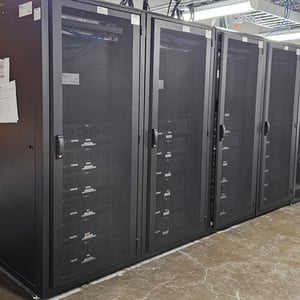
TSRgrow approaches lighting reliability from a systems-level perspective. By engineering advanced LED solutions without onboard ballasts, TSRgrow removes one of the most common causes of lighting failure altogether. Fewer electrical components translate to reduced maintenance requirements, longer fixture lifespans, and significantly lower risk of unexpected outages.
Beyond fixture design, remote power architecture plays a critical role in minimizing downtime. Centralized, smart power management allows operators to isolate, reset, or address issues without physically accessing every fixture. This capability is especially valuable in large-scale facilities, vertical racking systems, or multi-room operations where manual intervention can be time-consuming and disruptive. It will also become crucial for cultivation companies who will need to comply with FDA standards when cannabis moves to Schedule III, reducing or eliminating crop exposure during maintenance altogether.
However, eliminating hardware failures is only part of the equation. The most effective way to prevent downtime is to identify issues before they impact the grow room at all.
Monitoring Cannabis Lighting Downtime Before It Happens
Lighting failures rarely occur in isolation. They are often preceded by subtle environmental or electrical changes that go unnoticed until plants begin to show stress. Continuous monitoring bridges this gap by providing real-time visibility into grow conditions and system performance.
TSRgrow’s GROWHub Environmental Monitoring Software integrates lighting control, remote power, and environmental data into a single platform. With 24/7 monitoring, growers gain constant insight into temperature, humidity, CO₂ levels, light output, and other critical variables. Even minor deviations are flagged early, allowing teams to address potential issues long before they escalate into full lighting outages.
This proactive approach fundamentally changes how cultivation teams manage risk. Instead of discovering downtime after plants are affected, operators can respond in real time—often before anyone steps foot in the room. In many cases, systems can identify lighting interruptions before growers are even aware there is a problem.
Additionally, GROWHub enables zone-based lighting control, allowing cultivators to tailor light schedules to specific strains, growth stages, or master recipes. This level of precision not only improves crop consistency but also reduces stress on equipment by aligning performance with actual plant needs.
If you have not evaluated your lighting system recently, now is the time. Downtime may be costing more than you realize. Connect with a TSRgrow expert to assess your current setup and explore how a reliability-first lighting strategy can protect your next harvest.
Why Partner With TSRgrow
TSRgrow designs and manufactures advanced LED lighting solutions for commercial cultivation, including greenhouses, indoor grows, and vertical racking. Their TOTALgrow Solution approach goes beyond lighting, integrating remote power, environment and data management, and energy-efficient controls. With cloud-based and localized data management, plus high-accuracy wireless sensors for real-time environmental monitoring, TSRgrow delivers a fully customized solution to optimize your grow.
